
Letter NO. 11 | Snow Yunxue Fu
The Geography of the In-Between
Throughout the history of art, artists have turned to landscape as a means of visualizing humanity's encounter with forces larger than itself. Mountains, oceans, storms, and deserts became sites where the limits of perception met the vastness of existence. In the work of Snow Yunxue Fu, these landscapes have not disappeared; they have migrated into the digital realm.
Fu belongs to a generation of artists shaped by the rapid expansion of computational imaging technologies, yet her work resists the fascination with technology for its own sake that often characterizes contemporary digital art. What interests her is not the spectacle of innovation, but the use of virtual space as a framework for philosophical inquiry. Her simulated environments are less concerned with technology itself than with what it means to inhabit a world increasingly experienced through screens, networks, and mediated realities.
Working within a post-photographic framework, Fu creates immersive landscapes that seem suspended in a constant state of becoming. Geological formations dissolve into fluid structures, digital matter appears simultaneously natural and artificial, and familiar environments shift between recognition and uncertainty. These spaces are not representations of specific places but manifestations of psychological and metaphysical conditions. The viewer encounters a world that exists between reality and imagination, materiality and data, presence and absence.
Central to Fu's practice is the concept of liminality the condition of existing between one state and another. Borrowed from anthropology, the term traditionally describes transitional moments within rituals and rites of passage. Fu expands this idea into the realm of contemporary digital existence. In her work, virtual environments become the threshold spaces of the twenty-first century: places where identities are formed, realities are negotiated, and perceptions of self and world remain perpetually unsettled.
What makes her work particularly compelling is its refusal to position the digital in opposition to the real. Much of the discourse surrounding technology continues to rely on a binary distinction between physical and virtual experience. Fu dismantles that opposition. In her installations and moving-image works, digital environments function not as escapes from reality but as extensions of it. The virtual becomes another layer through which contemporary life is understood.
Her background in both traditional painting and advanced digital imaging is evident throughout her practice. The compositions often recall the ambitions of Romantic landscape painting, where artists sought to evoke awe, wonder, and the sublime. Yet her tools belong unmistakably to the present: rendering engines, simulation software, and immersive technologies. The result is a body of work that feels as though the tradition of nineteenth-century landscape painting has been reimagined through the visual language of the digital age.
Yet perhaps the most important key to understanding Fu's work lies not in technology but in the complexities of her lived experience. She exists simultaneously as an artist, professor, mother, wife, and daughter caring for aging immigrant parents. These overlapping responsibilities create a life lived between worlds a condition of constant negotiation between personal and professional identities, between care and creation, between obligation and selfhood. Seen through this lens, her fascination with liminal spaces is not merely theoretical; it emerges from experience.
As a Chinese-born artist living and working in the United States, Fu has long navigated multiple cultural, linguistic, and social realities. This condition of existing between places and histories becomes one of the defining structures of her practice. Her landscapes can be understood as metaphors for migration itself, not simply geographical movement, but the ongoing process of inhabiting multiple identities at once.
At a moment when artificial intelligence, virtual worlds, and immersive technologies are reshaping cultural production, Fu offers an alternative to both technological utopianism and technological anxiety. Her work neither celebrates nor condemns digital transformation. Instead, it asks a more enduring question: How do we locate meaning within environments that are increasingly fluid, mediated, and unstable?
The answer, if there is one, lies within the threshold itself. Snow Yunxue Fu's work occupies the space between landscape and simulation, embodiment and abstraction, physical presence and digital existence. Rather than attempting to resolve these tensions, she invites us to dwell within them.
Ultimately, what distinguishes Fu's practice is not simply her mastery of emerging technologies, but her ability to transform the complexities of contemporary life into experiences of reflection and wonder. She reminds us that uncertainty is not always something to overcome. Sometimes it is a place to inhabit. In an era defined by speed, certainty, and relentless visibility, Snow Yunxue Fu's work offers something increasingly rare: the possibility of remaining within the question.
Learn more about her work: https://snowyunxuefu.com/home.html
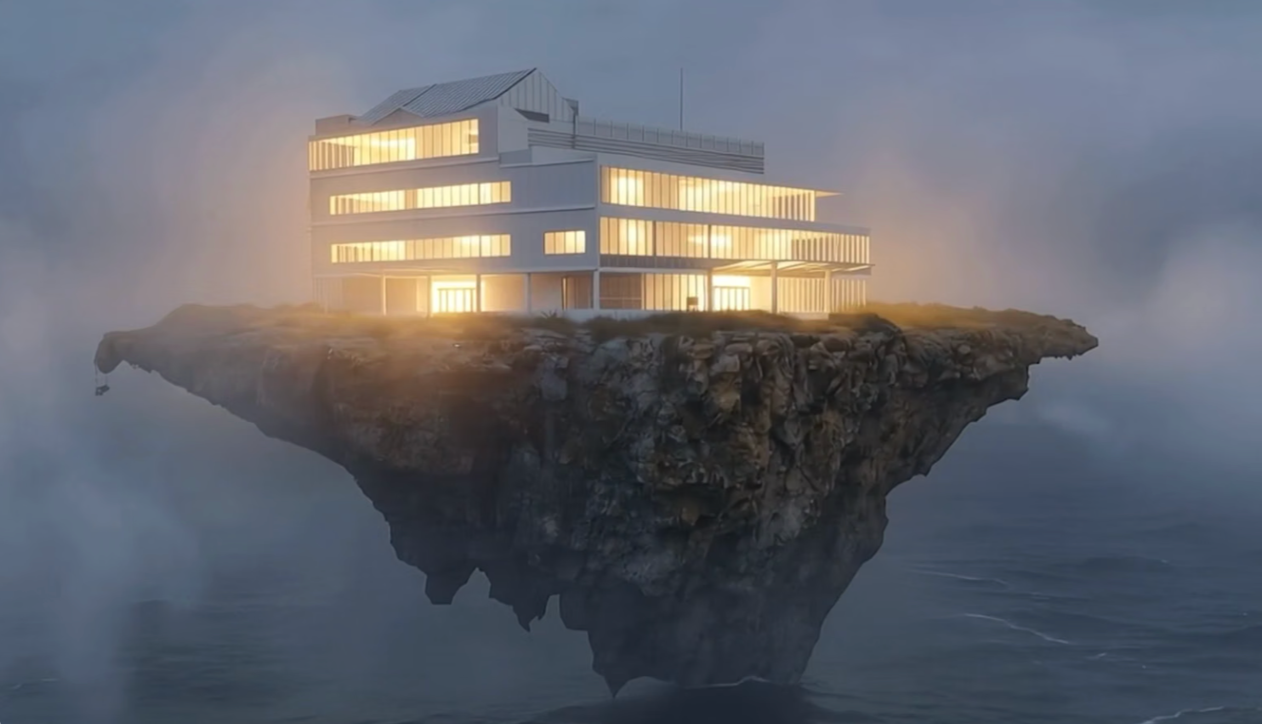
Portals (Part 3) Mixed Media 2026 - (image of the video) - see more : https://vimeo.com/1201514789?fl=pl&fe=sh
