
Letter NO. 10 | Yahya Dehghanpour
Dear Readers,
This issue of Bisheh is a little different.
About six months ago, I invited Yahya Dehghanpour to participate in the project and write a letter for Bisheh. With kindness, he told me that although he truly wanted to do it, life and his current circumstances were not allowing him the space or energy to write. I did not insist.
But the more I thought about the tenth issue of this project, the more I realized that it felt impossible for Yahya’s name not to exist within this archive.
So this time, instead of receiving a letter, I decided to write one myself. Perhaps a letter to Yahya. Perhaps a letter about him. Or perhaps simply a way of holding onto the presence of someone whose quiet and generous existence has shaped my life, and the lives of many others, more deeply than he probably realizes.
I first met Yahya around sixteen years ago through Tooraj. Before that, I had heard his name from afar, but I had never really known him personally. As time passed and our circles became closer, Yahya slowly became one of the most distinct and memorable people around us. Very quickly, a genuine connection formed between us. I loved spending time with him, our conversations, his way of looking at life, the way he observed the world.
In those years, many of our gatherings revolved around photography, cinema, books, and the artistic atmosphere in Iran. People would gather to talk about photographs, exhibitions, films, and whatever was unfolding within the art scene at the time. But beyond all of that, what stayed with me most was Yahya himself, his curiosity, his attentiveness, and the creative energy that always seemed alive within him.
When we immigrated to New York, Yahya became part of our very first experiences in this city. He welcomed us into his home with extraordinary generosity, and in a place where we knew almost no one, those first days of our new life unfolded beside him.
The first bookstores I visited in New York, the first galleries I saw in Chelsea, the first museums I wandered through here, all remain inseparable from Yahya in my memory.
Looking back now, I realize that what he gave us during those early years went far beyond hospitality. Immigration changes your relationship to the world. It changes your sense of stability, your confidence, even your understanding of who you are. There is a loneliness inside beginning again from nothing that is difficult to explain to anyone who has not experienced it. In those years, Yahya made New York feel less intimidating, less distant, and somehow more human.
But what made him truly important to me went far beyond art.
Throughout all these years, Yahya was one of the very few people who genuinely cared about our artistic lives. Not out of politeness or obligation. If he had not heard from us for some time, he would call and check in himself. He would ask: Are you working? Are you spending time in the studio? What are you making? How is life moving forward?
Sometimes I felt that he cared more deeply about my artistic process than even members of my own family.
And perhaps this is something only artists fully understand: how important it is to have even one person who continues to remind you that your creative life still matters, especially during periods when survival, uncertainty, exhaustion, and immigration begin to consume everything else.
People often ask me why I moved from painting toward photography. The truth is that part of that shift came through meeting people like Yahya. Not because he directly taught me photography, but because simply being around him changed the way I understood seeing. Through him, I encountered another way of experiencing photography, another way of paying attention to the world.
Even in later years, when carrying a camera had become physically difficult for him, he continued photographing constantly with his phone. Everywhere he went, he was still looking for images, still searching for moments worth capturing. He always woke up with a new idea, a new thought, a new excitement about making something.
I think this is one of the rarest qualities I have ever witnessed in an artist.
Many artists become distant from their work during difficult periods of life. Their creative energy fades, slows down, or disappears for a while. But with Yahya, I never saw that inner spark disappear. There was always a kind of childlike excitement inside him, a playfulness, a curiosity, an eagerness to discover something new each day.
That spirit was inseparable from the way he lived.
One of the things I admired most about him was his deep relationship with Persian literature. I loved listening to him speak about poetry, books, and language. There was something profoundly alive in the way he connected literature to everyday life. Later, I realized that this sensitivity came from his background, from growing up in a cultural and literary environment, from having a father who was a school principal, from studying Persian literature before eventually turning toward photography. Somehow all of these things shaped not only his artistic vision, but also his humanity.
And perhaps that is why being around him always felt meaningful. There was always a conversation unfolding, always a new idea, a memory, a book, an image, or a story waiting to be shared. Even his enthusiasm carried a kind of warmth that made people feel included in his excitement.
I am not someone who speaks openly about my emotions very often. But I have always carried the feeling that Yahya was different. The way he loved people was different. The way he formed friendships was different. There was never a sense of hierarchy between us, despite the difference in age and experience. Although he was much older than we were, he never made us feel small or inexperienced. Instead, he made closeness feel easy.
And perhaps more valuable than any artwork he created was the kind of human being he chose to be.
This letter may have been written in place of one he could not write himself, but in truth, it is about the impact certain people leave on our lives without ever fully realizing it.
People who may not be family by blood, yet somehow become family in every way that matters.
With Care
Negin
This letter is not an attempt to summarize Yahya’s life or accomplishments. Rather, it is a small gesture of remembrance for someone whose way of seeing, caring, and moving through the world left a lasting imprint on those around him.
As a quiet exception to the usual structure of Bisheh, this month’s letter is being shared publicly in honor of Yahya’s memory and enduring influence.
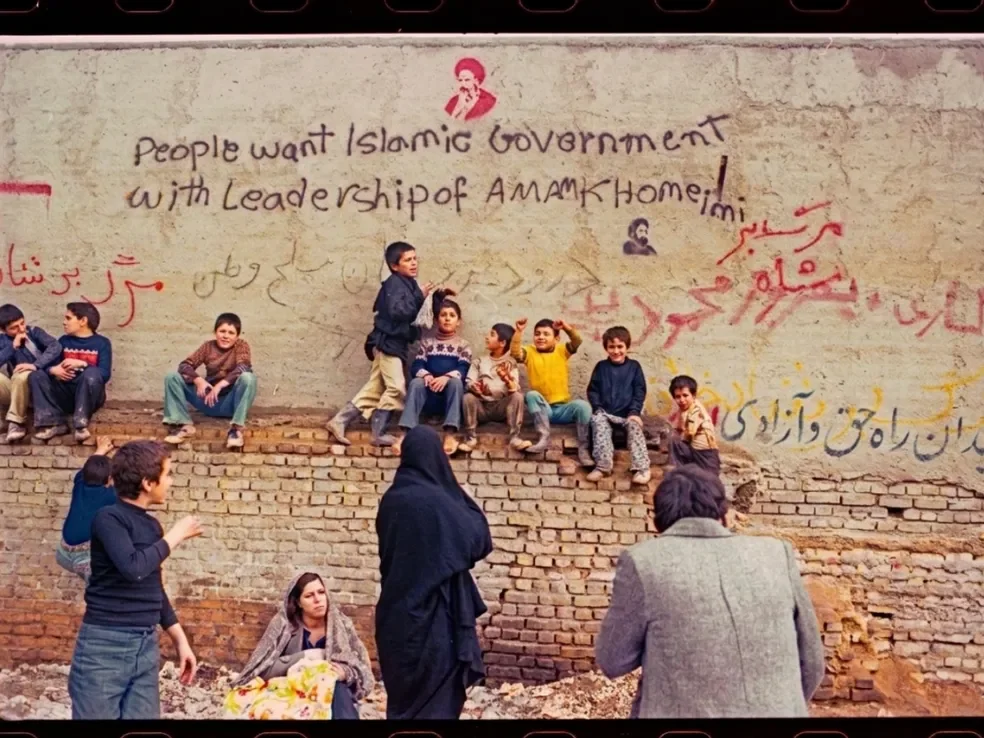
1979 Iranian Revolution
