
Jonathan Ellis
The Long Road of Looking
There is a particular tradition in American photography in which the road is more than a route between places. It is a method of seeing. From Walker Evans and Robert Frank to later photographers who have crossed the country in search of its vernacular landscapes, the journey has offered a way of confronting America through its surfaces: highways, buildings, signs, fields, monuments, abandoned structures, and the people who inhabit the spaces between them.
Jonathan Ellis works within this territory, but his photographs complicate the romance traditionally attached to the American road. He is a traveling photographer, writer, and experimental filmmaker whose work moves through a country that is simultaneously familiar and difficult to locate. The America encountered in his photographs is not presented as a coherent national portrait. It appears instead through fragments—places marked by history, economic change, environmental transformation, race, and the persistent contradictions between national ideals and lived experience.
Ellis is interested in looking, but equally in what prolonged looking does to the person behind the camera.
This distinction matters.
Photography has always carried with it a peculiar claim to evidence. A photograph tells us that something stood before the camera at a particular moment. Yet Ellis seems less interested in proving what America looks like than in asking what becomes perceptible when one remains with a place long enough. His images often begin with the ordinary. A road. A building. An industrial structure. A landscape whose significance may not immediately announce itself. The photograph asks the viewer to stay.
That patience is central to Ellis’s work.
In series such as Road Warrior and Heartland Studies, movement becomes a form of sustained attention rather than escape. Ellis travels through the United States by road, repeatedly returning his camera to the physical structures through which American identity is produced and contested. The landscape is never simply landscape. Geography carries evidence of labor, extraction, aspiration, abandonment, and power.
This becomes particularly important in considering Ellis’s interest in the American South and in the relationship between the natural environment, the changing energy economy, politics, and race. These subjects could easily produce photographs that announce their political meaning immediately. Ellis often takes a less declarative route. The tension resides in what the landscape contains and in what it withholds.
A photograph of a place can never contain the entirety of what happened there.
That limitation may be one of photography’s most productive qualities.
Ellis’s images ask us to consider the distance between visible surfaces and accumulated histories. The camera records what remains available to sight, while history frequently survives indirectly: in architecture, infrastructure, altered terrain, monuments, absences, and the social organization of space. Looking therefore becomes a kind of excavation. The photograph does not necessarily reveal the answer. It identifies the site where a question should be asked.
His Gateway Arch Project makes this relationship between landscape and national mythology especially resonant. The monument inevitably invokes expansion, movement westward, technological ambition, and the construction of an American historical narrative. But monuments are never neutral containers of memory. They tell us not only what a culture has chosen to remember but how it has chosen to organize that remembering. In photographing such spaces, Ellis places the monumental within the same visual continuum as the ordinary.
The gesture is significant because America is perhaps most revealing when these two registers meet.
The grand narratives of nationhood eventually materialize somewhere: in roads and neighborhoods, industrial sites and agricultural fields, borders and buildings. History becomes infrastructure. Ideology acquires architecture. Economic decisions reshape landscapes.
Ellis photographs the residue.
Yet describing the work exclusively through politics would miss something fundamental about his practice. There is also curiosity here, even affection. Ellis himself describes his work as both critical and celebratory of American society. That duality prevents the photographs from settling comfortably into either condemnation or nostalgia.
Instead, America appears as an unresolved proposition.
This ambivalence gives the work much of its emotional intelligence. To travel repeatedly through a country is to encounter its capacity for beauty alongside its histories of violence, its expansiveness beside its exclusions, its promises beside the evidence of promises deferred. Ellis does not need to resolve these contradictions because the contradictions themselves become his subject.
The photographer consequently occupies an unstable position: witness, participant, outsider, citizen, traveler.
For Ellis, that instability seems productive. The road allows him to move physically through different American realities while photography permits another kind of movement between observation and introspection. What begins outside the body eventually returns to it. Looking at landscape becomes a way of thinking about history; thinking about history becomes inseparable from considering one's own position within it.
This may explain why endurance feels so present in Ellis’s practice.
Photography is often discussed in terms of the decisive moment, as though meaning arrives suddenly and the photographer's task is simply to recognize it. Ellis’s work suggests another possibility: that meaning accumulates through persistence. Mile after mile. Image after image. Returning, watching, questioning, continuing.
The road in these photographs therefore becomes both literal and psychological.
There is no final America waiting at its end.
There are only further encounters another landscape, another structure, another history partially visible beneath the present. Ellis keeps moving through them, not because movement guarantees revelation, but because sustained attention remains one of the few ways of resisting easy conclusions.
The camera, in his hands, becomes less an instrument for declaring what America is than a reason to continue looking.
And perhaps that is the more demanding proposition: not to arrive at certainty, but to remain attentive enough to recognize how much remains unresolved.
Learn more about his work: https://www.jaefoto.com/
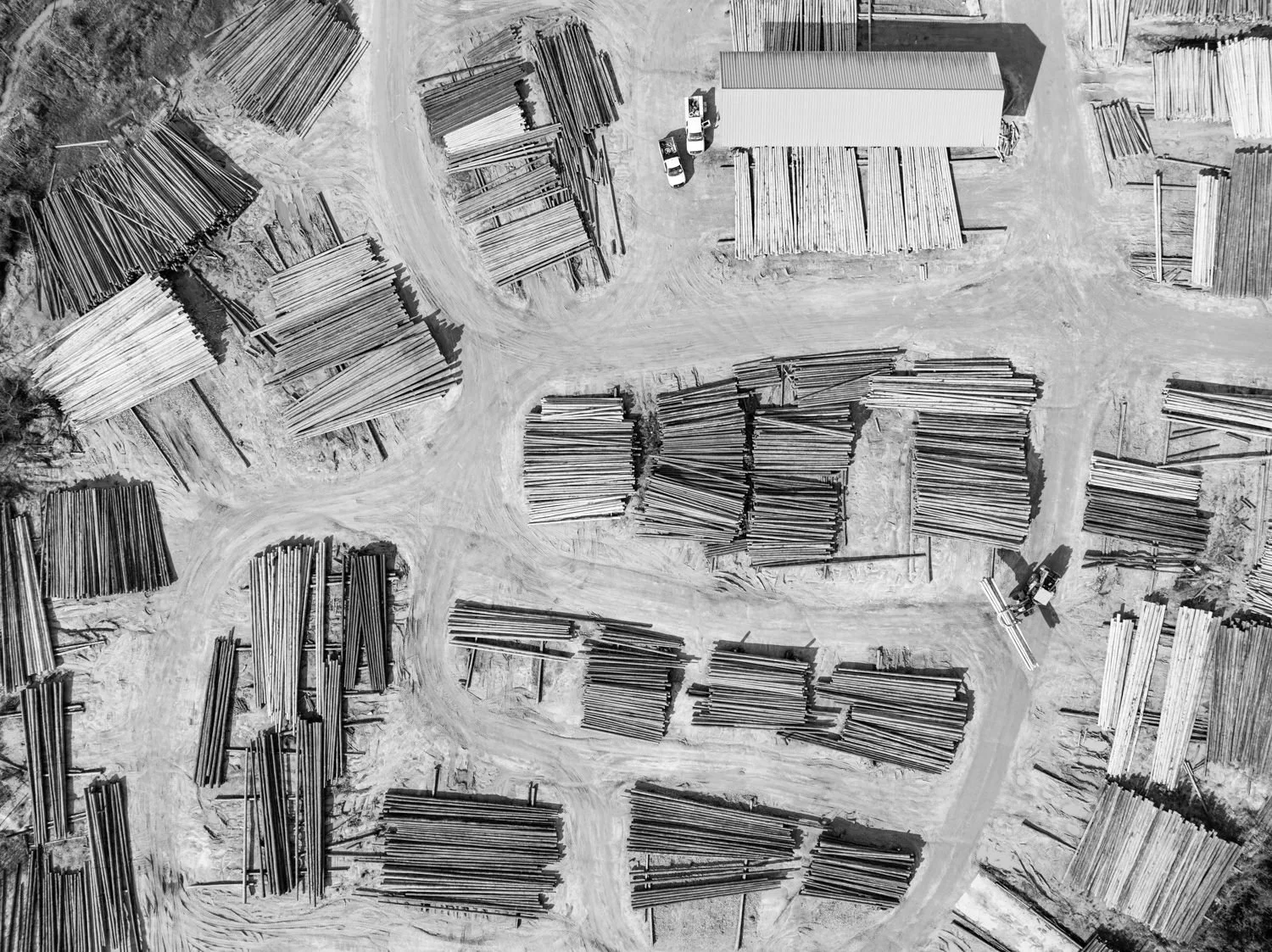
Heartland Studies
